
GMC Dashboard Warning Lights and Symbols
Your GMC uses color, shape, and text to rank every problem from "pull over immediately" to "schedule a visit" - here is exactly what each light means and what to do about it.
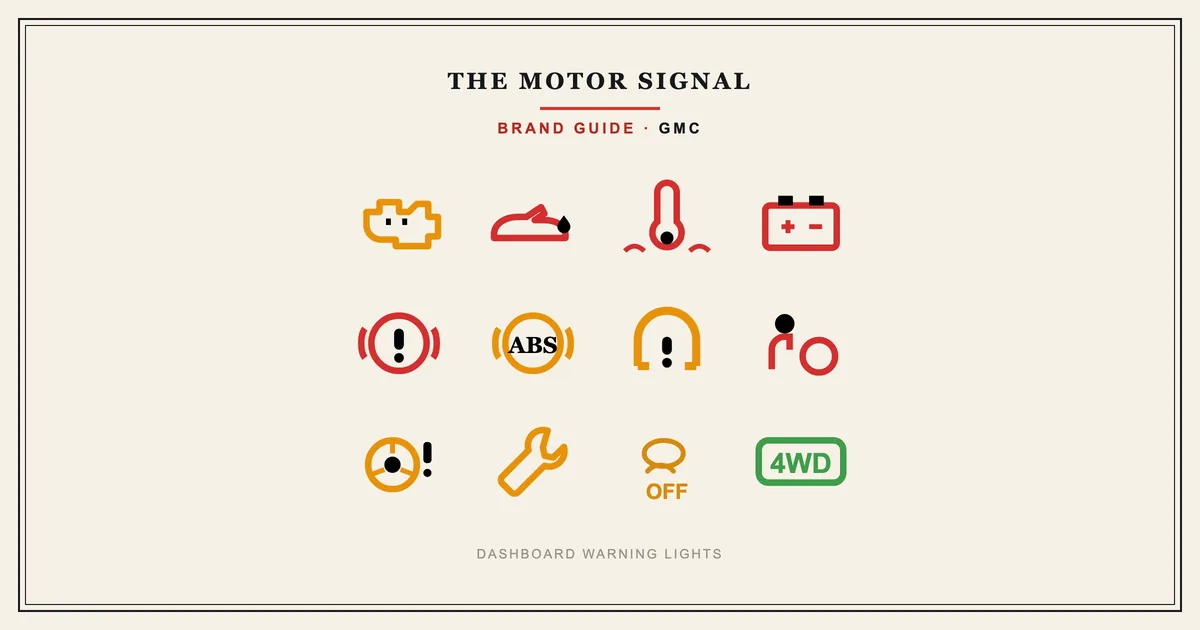
How GMC color-codes its warning lights
GMC uses three colors across its lineup - Sierra, Acadia, Terrain, Yukon, and Canyon included. Red means the situation is serious enough to stop or act right away. Amber (sometimes orange or yellow) means something needs attention, but you typically have time to reach a shop without causing damage. Green and blue are informational - they tell you a system is active, not that something is wrong.
A few lights also appear as white, and those are generally status indicators for features like adaptive cruise or lane keep assist. The severity ranking is: red first, amber second, everything else is just information. When in doubt, red always wins.
Text messages in the Driver Information Center - phrases like "Service StabiliTrak" or "Reduced Engine Power" - follow the same logic. Treat any red-background DIC message the way you would a red warning light.
GMC warning light symbols and what they mean
The table below covers the most common lights across the GMC range. Colors shown are the standard operating colors - some lights can appear in multiple colors depending on severity.
Check Engine (MIL)
The engine control module has detected a fault in the engine or emissions system. A steady light means a stored code; a blinking or flashing light means the engine is misfiring badly enough to damage the catalytic converter. Steady: schedule a diagnostic scan soon. Blinking: reduce speed, avoid heavy throttle, and get to a shop that day - continued driving risks expensive catalytic converter damage.
Oil Pressure Warning
Oil pressure has dropped below the safe threshold. Running an engine without oil pressure causes rapid and catastrophic internal damage within minutes. Pull over safely and shut the engine off immediately. Check the oil level on the dipstick. Do not restart and drive - have the vehicle towed if oil level is normal, as a pump or sensor failure may be the cause.
Engine Coolant Temperature
Coolant temperature has exceeded the safe range. Sustained overheating warps cylinder heads and can destroy an engine in a short distance. Stop driving as soon as it is safe. Turn the heater on full to help draw heat from the engine while pulling over. Never open the radiator cap when hot. Have the cooling system inspected before driving again.
Battery / Charging System
The charging system is not maintaining battery voltage. This usually points to a failing alternator, a loose belt, or a bad battery. The vehicle will continue running on battery reserve - for a limited time. Head to a shop without delay. Turn off non-essential electrical loads (rear defroster, heated seats, extra accessories) to extend range. If voltage drops too low, the engine will stall.
Brake System Warning
Brake fluid is low, a hydraulic fault has been detected, or the brake booster has an issue. On some GMC models this light also comes on when the parking brake is applied and not released. First check that the parking brake is fully released. If the light stays on, do not drive - low brake fluid can indicate a leak in the system. Have it inspected immediately.
ABS (Anti-lock Brake System)
A fault has been detected in the anti-lock brake system. Normal braking still works, but the ABS function that prevents wheel lock-up during hard stops is disabled. Schedule service. Brake normally and increase following distance until repaired - you no longer have ABS protection in emergency stops. A bad wheel speed sensor is the most common cause.
Tire Pressure (TPMS)
One or more tires are significantly under-inflated - typically 25 percent or more below the recommended pressure shown on the door jamb sticker. Check all four tire pressures when the tires are cold. Inflate to the specification on the door jamb, not the maximum on the tire sidewall. If the light stays on after correct inflation, a TPMS sensor may need replacement.
Airbag / SRS Warning
A fault has been detected in the supplemental restraint system. With this light on, airbags and seatbelt pretensioners may not deploy correctly in a crash - or could deploy unexpectedly. Have the system scanned and repaired at a dealer or qualified shop. The fault is recorded as a diagnostic trouble code. Do not ignore this light - it is a safety-critical system.
Electric Power Steering Fault
The electric power steering system has detected a failure. Steering may feel very heavy and require significantly more effort, especially at low speeds and during parking. You can still steer, but it takes much more physical effort. Drive carefully to a shop. Avoid high-speed maneuvers until the system is repaired.
Reduced Engine Power
The powertrain control module has detected a fault serious enough to limit engine output intentionally. Common triggers include throttle body issues, sensor failures, a weak battery, or an alternator problem. The engine will feel noticeably sluggish. You can drive to a shop at reduced power, but do not ignore this. Have the vehicle scanned for codes - the PCM stores the specific fault that triggered the protection mode. Throttle body cleaning or sensor replacement resolves most cases.
Wrench (Powertrain / Service)
On GMC vehicles, the wrench symbol indicates either a scheduled maintenance milestone (oil change due, for example) or a powertrain/drivetrain fault detected by the control modules. It is not always just a routine reminder. Check the Driver Information Center for an accompanying message. If it says "Change Engine Oil Soon" - it is a maintenance reminder. If there is a powertrain-related message alongside it, treat it as a fault and have the vehicle scanned.
StabiliTrak Off / Traction Control Off
When steady, this indicates the driver has manually disabled StabiliTrak (GMC's stability control system) or traction control. When flashing, the system is actively working to prevent a skid or wheel spin. A steady light combined with a DIC message saying 'Service StabiliTrak' means a fault has been detected. Flashing during acceleration or cornering is normal operation. A steady 'Service StabiliTrak' message means schedule a diagnostic - wheel speed sensors are a common culprit. Note that an ABS fault often triggers StabiliTrak warnings simultaneously.
Four-Wheel Drive Active
Indicates the selected 4WD mode (4Hi or 4Lo). Amber can signal a transfer case fault on some models; green typically means the mode is active and functioning normally. If green - system is working as intended. If amber and accompanied by a DIC message about the transfer case, schedule service. Do not drive in 4Lo on dry pavement - it will stress the drivetrain.
Trailer Brake System / Service Trailer Brake
A fault has been detected in the trailer brake controller. On Sierra and Yukon models that regularly tow, this light often appears alongside ABS and StabiliTrak warnings when there is a wheel speed sensor issue. Schedule service. If towing, check the trailer brake controller settings and wiring connections first. A scan for codes will pinpoint whether the fault is in the controller, the wiring, or upstream in the ABS/wheel speed sensor circuit.
Lane Departure Warning
Appears when the system detects the vehicle is drifting out of a detected lane line without the turn signal active. If the light is steady amber in the instrument cluster, the system may have been disabled or is unavailable (dirty camera, heavy rain, faded lane markings). If the system is alerting during a drift - correct your steering. If the light is a fault indicator, check whether the forward camera lens is clean. The system can be toggled off via the Driver Assistance settings menu.
Service StabiliTrak (DIC Message)
This text message in the Driver Information Center means the stability control system has detected an internal fault and has disabled itself. Unlike the flashing traction control icon, this is not normal operation - the system is not working. Have the vehicle scanned. The most common causes are a faulty wheel speed sensor, a bad steering angle sensor, or a lateral acceleration sensor issue. ABS and trailer brake lights often illuminate at the same time for the same root cause.
Which GMC lights mean stop driving now
Three lights should prompt an immediate stop: oil pressure (red oil can), engine coolant temperature (red thermometer), and the brake system warning (red circle with exclamation mark) when it is not linked to the parking brake.
The oil pressure light is the most time-critical. Driving even a short distance with no oil pressure can seize the engine completely - repair bills often exceed the value of the vehicle. Pull over, shut off the engine, and call for a tow if the oil level checks out on the dipstick.
A red battery light is serious but gives a bit more buffer. The alternator is not charging, and the vehicle is running on stored battery power. On modern GMCs with heavy electrical loads, that reserve can run out faster than expected - sometimes within 20 to 30 minutes. Head straight to a shop.
The reduced engine power warning is amber, not red, but it belongs in this conversation. GMC's electronic throttle control is limiting output to prevent damage. The car moves, but performance is deliberately capped. Drive to a shop that day rather than leaving it for the weekend.
What to do when a warning light comes on
The first step is always the same: check the Driver Information Center. GMC's DIC displays text messages alongside most warning lights and often names the exact system with the fault - "Low Oil Pressure," "Service Trailer Brake," "Check Fuel Cap." That context changes what you do next.
For amber lights without a DIC message, a free scan at most auto parts retailers will pull any stored codes. Codes are not a diagnosis on their own, but they narrow the field significantly and help a technician find the problem faster.
If multiple lights appear at once - ABS, StabiliTrak, and trailer brake together, for example - do not assume there are three separate problems. On GMC trucks and SUVs, a single failing wheel speed sensor can knock out all three systems at once. One scan, one repair, one bill.
Keep your GMC's owner manual in the glovebox. Each model year has minor differences in what certain lights mean, and the manual includes a complete light index specific to your trim and options.
Your questions answered
What does the wrench light mean on a GMC?
On GMC vehicles, the amber wrench symbol can mean either a scheduled maintenance reminder (such as an oil change) or a powertrain fault detected by the control module. Check the Driver Information Center for a text message - if it says 'Change Engine Oil Soon' it is a routine reminder; any other powertrain message means you should get the vehicle scanned for diagnostic codes.
Can I drive with the StabiliTrak light on?
You can drive with a 'Service StabiliTrak' message, but stability control is disabled, so the vehicle will not intervene if you begin to skid. Drive carefully and avoid aggressive maneuvers until it is repaired. The most common cause is a wheel speed sensor, which also frequently triggers ABS and trailer brake warnings at the same time.
Why did multiple warning lights come on at once on my GMC Sierra or Yukon?
Multiple simultaneous lights - typically ABS, StabiliTrak, and Service Trailer Brake - usually share one root cause on GMC trucks. A single faulty wheel speed sensor causes the ABS to stop working, and because StabiliTrak and the trailer brake controller depend on wheel speed data, they shut down too. A scan will point to the specific sensor or circuit.
What should I do if my GMC shows 'Reduced Engine Power'?
The Reduced Engine Power message means the powertrain control module has deliberately limited throttle output to protect the engine or drivetrain from damage. Common causes include a faulty throttle position sensor, a dirty throttle body, or a charging system problem. The vehicle can still be driven to a shop, but have it scanned and repaired promptly - continuing to drive it in this state is not recommended long-term.