
2017 Hyundai Elantra Warning Lights: Every Symbol on the Dash
The sixth-generation Elantra packs more safety tech than ever - here is what every light on its instrument cluster actually means.
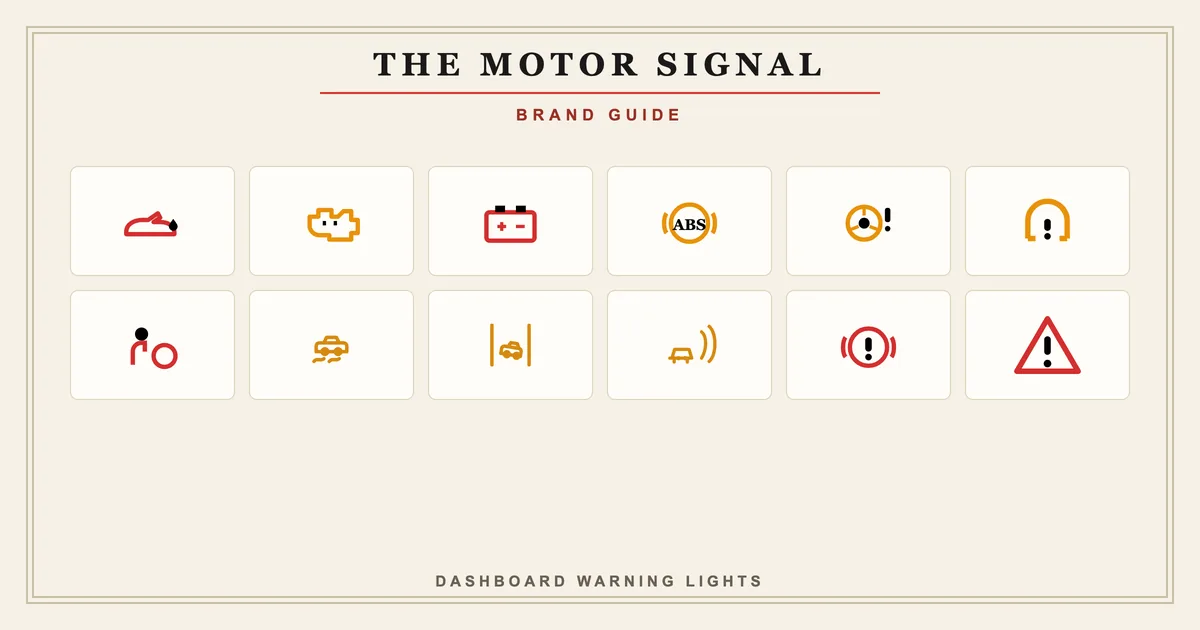
Red warning lights - stop and act immediately
Any red light on the 2017 Elantra cluster is a direct instruction to pull over safely. Driving through a red warning risks catastrophic engine damage, brake failure, or a crash.
Engine Oil Pressure
Engine oil pressure has dropped to a dangerously low level - oil is no longer circulating properly through the engine Stop immediately. Shut off the engine. Check the oil level with the dipstick; top up if low. If the level is fine but the light persists, do not restart - call for a tow. Running an engine without oil pressure destroys the bearings within minutes.
Engine Coolant Temperature
Coolant temperature has exceeded the safe operating threshold - the engine is overheating Pull over and shut the engine off. Do not open the radiator cap while hot. Check coolant level once the engine has cooled; look for leaks under the car. If coolant is full and the car overheats again on restart, have it towed.
Brake System
Either the parking brake is engaged, or a fault has been detected in the hydraulic brake system - possibly low brake fluid First check that the parking brake is fully released. If the light stays on while driving, check brake fluid level in the reservoir under the hood. Low fluid can mean a leak or worn-out pads. Do not drive if fluid is very low.
Master Warning
A critical fault in one or more vehicle systems is demanding immediate attention - check the cluster LCD for the specific message Read the companion text message on the cluster display. That message identifies the system at fault. Treat the light as red until you know what triggered it.
Amber warning lights - schedule service
Amber or yellow lights on the 2017 Elantra indicate something needs attention, but you are not in immediate danger. Most can be driven to a shop, though none should be ignored for more than a day or two. The Nissan Versa and Elantra share a number of common amber indicators from this era - TPMS and ABS in particular work almost identically.
Check Engine (MIL)
The engine control module has detected an emissions or powertrain fault and stored an OBD-II diagnostic trouble code A steady amber check engine light means drive to a shop and have the code read. A flashing check engine light means a serious misfire is occurring right now - reduce speed and load immediately and avoid highway driving until diagnosed.
Battery / Charging System
The alternator is not maintaining proper voltage, or the battery is failing - the car is running on battery power alone Turn off non-essential electrical loads (A/C, heated seats). Drive to the nearest auto parts store or shop. The engine may stall if the battery drains completely. Have the battery and alternator tested.
ABS
The anti-lock braking system has a fault and has disabled itself - normal braking still works but ABS will not intervene in a hard stop Standard braking is unaffected. Drive to a shop for a scan - common causes include a faulty wheel speed sensor. Avoid driving in slippery conditions where ABS would normally help.
EPS (Electric Power Steering)
The electric power steering system has detected a fault and may have partially or fully disabled power assist You can still steer, but it requires noticeably more effort - especially at low speeds and when parking. Drive carefully and slowly to a Hyundai dealer. EPS faults on the 2017 Elantra are sometimes triggered by a software issue or a faulty torque sensor.
Tire Pressure (TPMS)
One or more tires are significantly under-inflated, OR a TPMS sensor fault has been detected. The two conditions display differently. Blinking for about 60-90 seconds on startup then staying solid: check and inflate all four tires to the door-placard pressure. Blinking in regular 3-second repeating intervals: a sensor malfunction, not just low pressure - dealer visit required to replace or re-learn the sensor.
Immobilizer
The anti-theft immobilizer is active. The car key icon lights at ignition and should extinguish when the engine starts successfully. Flashing after startup means the ECU did not recognize the key transponder. Try the spare key. If both keys fail, the immobilizer module or key may need dealer reprogramming.
ESC / VSM (Traction/Stability)
The Electronic Stability Control and Vehicle Stability Management system is active (flashing) or has a fault (solid). A separate ESC OFF light appears when the system is manually disabled. Flashing while cornering or accelerating: ESC is working normally, reducing wheelspin or correcting a slide. Steady amber: the system has a fault and is off - drive with extra care and have the wheel speed sensors and ESC module inspected.
LKAS (Lane Keeping Assist)
The front windshield camera cannot detect lane markings, or the system has a fault. Present on Value Edition and above. Clean the inside of the windshield behind the rear-view mirror where the camera lens sits. Bright sun directly in the camera or a dirty lens are the most common causes. If the light persists after cleaning, have the system re-calibrated.
BSD (Blind Spot Detection)
The blind spot monitoring radar sensors in the rear bumper have a fault or are obstructed. Present on Sport and Limited trims. Check the rear bumper area for mud, ice, or a trailer hitch cover blocking the sensors. Clean the area and restart. If the fault persists, the rear radar module may need replacement.
Airbag (SRS)
A fault has been detected in the supplemental restraint system - airbags, seatbelt pretensioners, or impact sensors may not deploy correctly in a crash Have this scanned and repaired promptly. Do not sit in the passenger seat with a known SRS fault if you can avoid it. The airbag module stores specific fault codes that tell a technician exactly which component failed.
Green and blue informational lights
These lights indicate that a feature is active or enabled. They are not warnings. A green or blue light that stays on unexpectedly - or one that fails to appear when it should - may signal a feature fault worth mentioning at the next service visit.
High Beam
High-beam headlights are active Informational only. Dim to low beams when approaching oncoming traffic.
Seat Belt Reminder
Driver or front passenger seat belt is not fastened Fasten the seatbelt. The light and chime will stop once all occupied front seats are buckled.
SmartSense ADAS lights unique to the 2017 Elantra
The 2017 Elantra introduced Hyundai SmartSense as standard or optional equipment across the trim lineup. Value Edition added Forward Collision-Avoidance Assist, LKAS, Driver Attention Warning, and High Beam Assist. Sport and Limited added Blind Spot Detection and Rear Cross-Traffic Alert.
All SmartSense functions share the same front camera-and-radar architecture. A single obstruction - a crack in the windshield, a sticker near the camera, or heavy fog - can light up multiple ADAS warning lamps simultaneously. If two or three ADAS lights appear at once, check the master warning triangle message first, then inspect the camera area before assuming a module failure.
The Forward Collision-Avoidance light (if fitted) is a yellow car symbol with lines in front of it. If it flashes and chimes, the system has detected an imminent collision and is preparing to brake automatically. If it stays on solid, the sensor is unavailable. The same sensor blockage logic that affects the Nissan forward collision warning applies here - the fix is usually cleaning the radar behind the front emblem.
For a full comparison of how these systems work across model years, the multiple lights at once scenario is worth reading if your Elantra shows more than one ADAS warning simultaneously.
Your questions answered
Why is my 2017 Hyundai Elantra brake light on but the parking brake is released?
<p>The brake warning light monitors two separate things: parking brake engagement and hydraulic system health. With the parking brake fully released, a lit brake light points to low brake fluid or a pressure fault in the system. Check the brake fluid reservoir under the hood. If it is at or below the MIN mark, have the brakes inspected for worn pads or a fluid leak before driving further.</p>
The EPS light came on and steering feels heavy - is it safe to drive?
<p>You can steer, but the effort required increases substantially, especially at low speeds. Drive slowly and avoid tight parking maneuvers. The 2017 Elantra uses a fully electric power steering rack with no hydraulic backup; when the system faults, you are steering through the rack mechanically. Get it to a Hyundai dealer as soon as possible for a fault-code scan.</p>
Can I reset the check engine light myself on a 2017 Elantra?
<p>You can clear the code with an OBD-II scanner, but the light will return if the underlying fault is still present. Disconnecting the battery may also clear it temporarily. Clearing codes without fixing the problem only delays the diagnosis and can prevent emissions readiness monitors from completing, which matters at inspection time. Have the code read first at a parts store (usually free) so you know what you are dealing with.</p>
What does it mean when the TPMS light flashes then stays on my 2017 Elantra?
<p>Flashing for roughly 60-90 seconds on startup, then staying solid, is the standard Hyundai signal for under-inflation in one or more tires. Check the pressure in all four tires against the placard on the driver's door jamb (typically 33-35 PSI for the Elantra). If all four tires are properly inflated and the light still stays on, a TPMS sensor may need to be re-learned or replaced.</p>
My LKAS light is on but the windshield is clean - what else could block the camera?
<p>The camera sits on the inside top of the windshield, just behind the rear-view mirror. External dirt on the glass is the most obvious culprit, but the camera can also be triggered by interior haze or fogging on the inside of the windshield, a window tint strip that reaches the camera, or a dealer-installed adhesive (parking stickers, registration holders) placed too high on the glass. Recalibration is required any time the windshield is replaced, even if the camera module itself is untouched.</p>